Dom / Vijesti i događaji / Vijesti iz industrije / Održavanje stanica ispod 35°C: MS-GS215-2H3 put do 6000 ciklusa i 70% EOL
-
 BRZA DOSTAVA
-
 KONKURENTNA CIJENA
-
 ODLIČAN NAKNADNI SERVIS

Zatražite besplatnu ponudu
 0
0


Vijesti iz industrije
Jul 14,2026
Održavanje stanica ispod 35°C: MS-GS215-2H3 put do 6000 ciklusa i 70% EOL
Broj koji se ne prikazuje u usporedbi specifikacija
Većina C&I baterijskih ormara se uspoređuje na kWh, kW i cijenu po ciklusu. Ono što se rijetko ispituje je petlja kontrole temperature koja određuje je li oglašeni broj ciklusa realan ili optimističan. Ćelija koja se drži na 35°C razgrađuje se na znatno drugačijoj krivulji od one koja redovito raste na 45°C ili 50°C — a ta se razlika tijekom tisuća ciklusa spaja u godine upotrebljivog životnog vijeka imovine.
Deyeov MS-GS215-2H3 povezuje svoje ≥6000 ciklusa, 70% kraj životnog vijeka ocjena kapaciteta izravno na sustav upravljanja toplinom izgrađen oko jednog cilja: održavati svaku ćeliju ispod 35°C, bez obzira na uvjete okoline ili opterećenje punjenja/pražnjenja. Ovaj dio govori o tome kako se ta meta zapravo drži.
Dvosmjerna kontrolna petlja, ne samo hlađenje
Soba s baterijama ne oslanja se na jednu jedinicu za hlađenje koja reagira na jedan senzor. Hlađenje dolazi iz klima uređaja; grijanje dolazi od PTC grijača ugrađenog u istu petlju. Oba se kontinuirano prilagođavaju na temelju očitanja temperature ćelije u stvarnom vremenu, zajedno s izlazom ventilatora paketa, održavajući odjeljak unutar radnog opsega od 15-37°C .
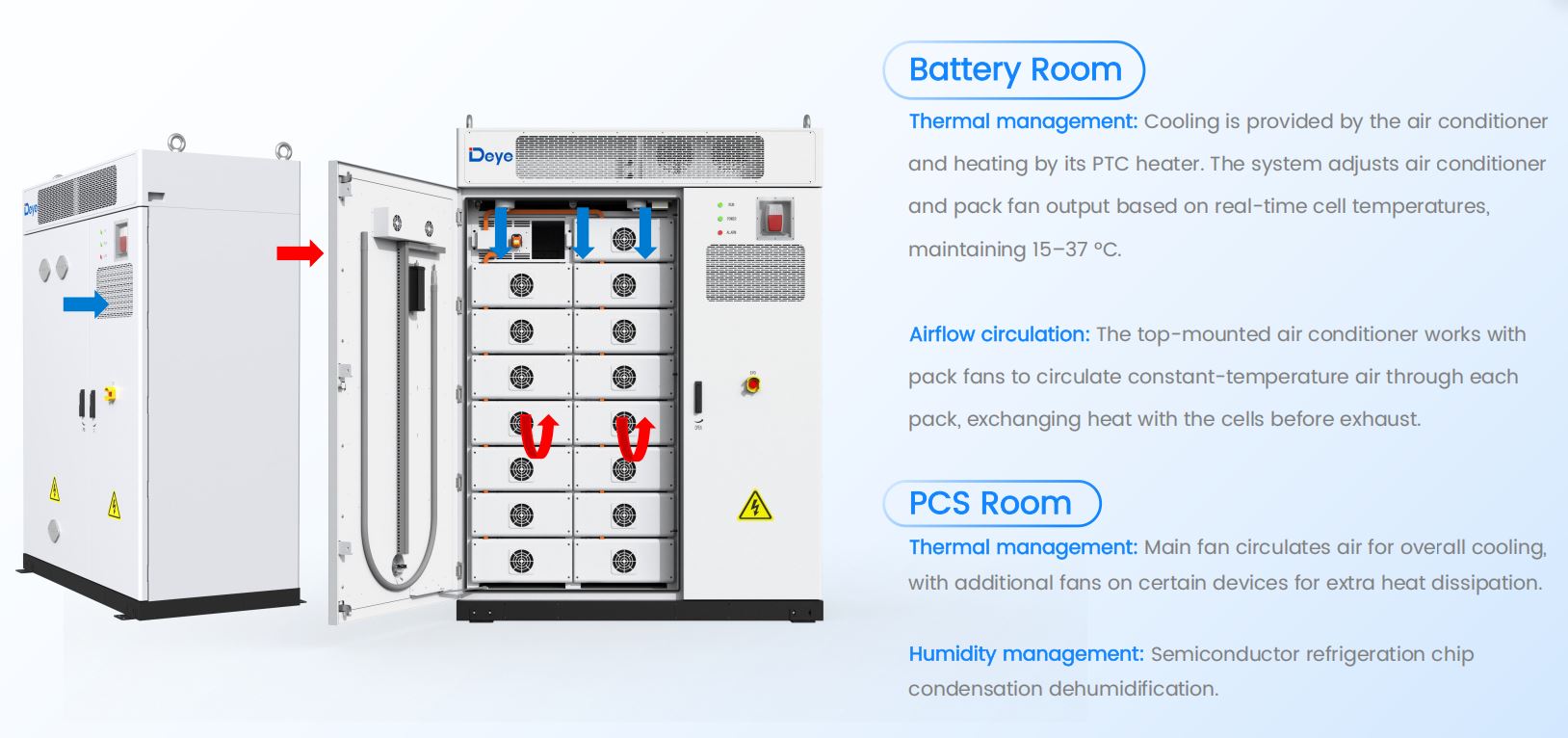
Pokretanje grijanja i hlađenja na istoj regulacijskoj petlji važno je u klimama s velikim dnevno-noćnim promjenama ili sezonskim ekstremima. Ormarić koji samo hladi pustit će ćelije da se ohlade tijekom zimskih jutra, što šteti prihvaćanju punjenja i ubrzava rizik od litijske presvlake pri niskim temperaturama jednako sigurno kao što toplina ubrzava degradaciju na drugom kraju.
Protok zraka: Dovod zraka konstantne temperature u svaki paket, ne samo u prostoriju
Održavanje prosječne temperature na razini prostorije nije isto što i držanje svake ćelije na toj temperaturi — odjeljak može imati prosječnih 30°C dok su paketi na stražnjoj strani topliji od paketa u blizini klima uređaja. Deyeov dizajn usmjerava zrak aktivno, a ne pasivno: gornji klima uređaj radi zajedno s pojedinačnim ventilatorima , gurajući zrak konstantne temperature kroz svaki paket naizmjenično tako da izmjenjuje toplinu sa stanicama izravno prije nego što se iscrpi.
| Zona | Praćeni domet |
|---|---|
| Donja pakiranja | Ćelije #1-8 (T1-T9) |
| Gornja pakiranja | Ćelije #9-16 (T10-T16) |
| Ventilacijske zone | T11, T12, T13 |
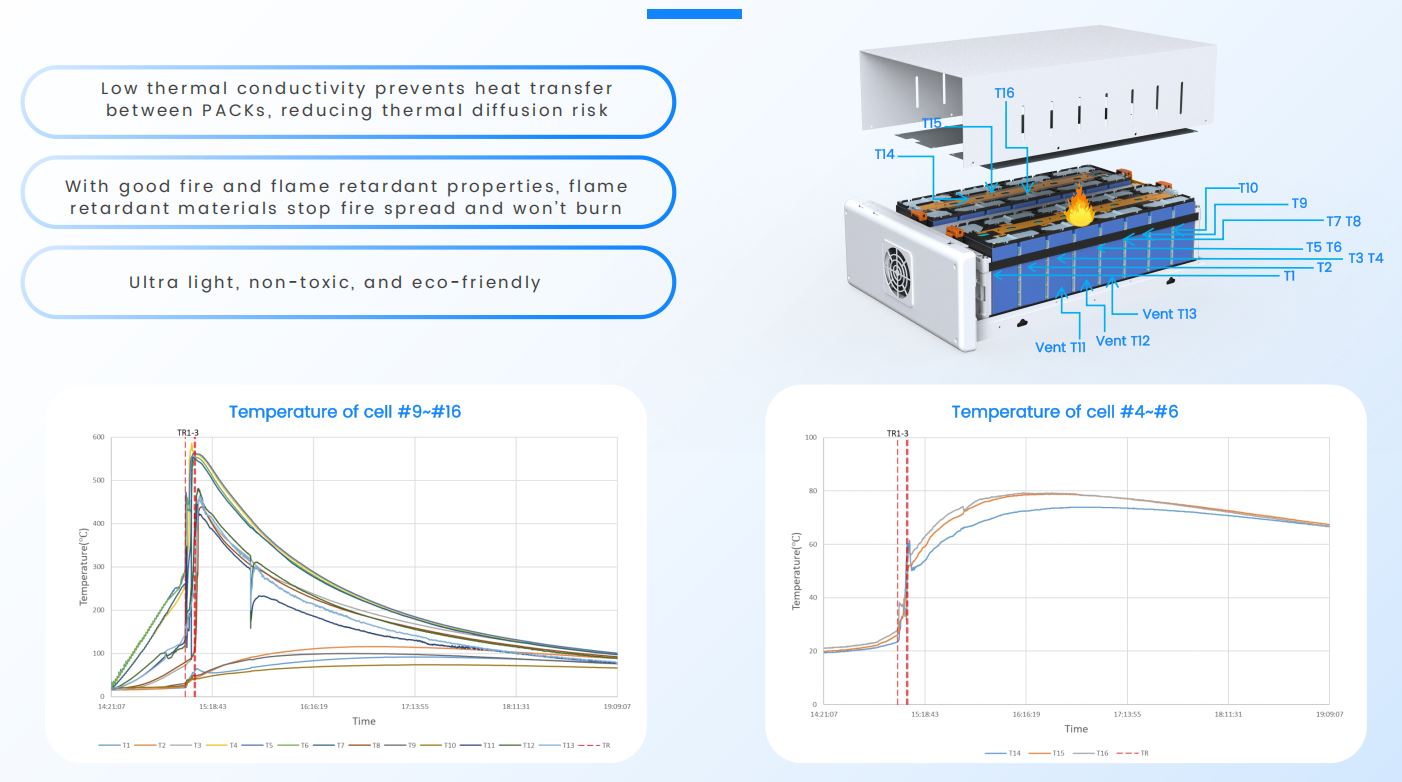
Ova cirkulacija od pakiranja do pakiranja je ono što čini deltu temperature od ćelije do ćelije - ne samo prosjek prostorije - varijablom koju je moguće kontrolirati. Kabinet koji samo mjeri temperaturu okolnog zraka ne može na vrijeme uhvatiti niti jedan pregrijani paket; onaj koji nadzire šesnaest različitih zona može.
Izolacija kao pasivni povratni mehanizam
Aktivno strujanje zraka zadovoljava normalne radne uvjete, ali izolacijski sloj na razini paketa ograničava koliko daleko toplina putuje ako se jedan paket zagrije. Materijal između pakiranja je specificiran za nisku toplinsku vodljivost posebno za usporavanje prijenosa topline na susjedna pakiranja, smanjujući rizik od toplinske difuzije preko hrpe. Također je otporan na plamen, lagan i netoksičan — svojstva koja su jednako važna za ono što se događa tijekom aktivnog toplinskog događaja kao i za rutinski svakodnevni rad.
Ovo je isti izolacijski sloj koji funkcionira kao mjera zadržavanja u protupožarnom dizajnu ormara — upravljanje toplinom i zaštita od požara ovdje nisu odvojeni sustavi, oni dijele istu fizičku barijeru radeći dva posla odjednom.
PCS soba pokreće vlastiti rashladni krug
Energetska elektronika stvara svoje vlastito toplinsko opterećenje neovisno o bateriji, tako da se odjeljkom za PCS upravlja odvojeno od prostorije za baterije. Glavni ventilator upravlja cjelokupnom cirkulacijom zraka, s dodatnim ventilatorima postavljenim na specifične komponente visoke disipacije za ciljano hlađenje. Vlažnost se kontrolira pomoću poluvodičkog rashladnog čipa koji kondenzira i uklanja vlagu iz zraka u odjeljku.
Odvajanjem dviju termalnih zona izbjegava se uobičajeni prečac u dizajnu: dijeljenje jedne petlje za hlađenje između baterija i energetske elektronike ima tendenciju da obje budu premale, budući da dvije imaju različite temperaturne tolerancije i različite posljedice kvara.
Što 35°C Control zapravo kupuje: 6000 ciklusa i 70% EOL
Glavni brojevi na ovom ormariću — ≥6000 ciklusa i 70% zadržavanje kapaciteta na kraju životnog vijeka — nisu neovisni o gore opisanom toplinskom sustavu; oni su izravni rezultat toga. Vrijednosti životnog vijeka LFP ciklusa uvijek su uvjetovane radnom temperaturom, a Deyeova ocjena je ostvariva samo zato što petlja upravljanja toplinom drži ćelije unutar raspona od 15-37°C ranije opisanog umjesto da ih pušta da se mijenjaju s uvjetima okoline.
| metrički | Vrijednost |
|---|---|
| Ciklus života | ≥6000 ciklusa |
| Kapacitet na kraju životnog vijeka | 70% |
| Gornja granica temperature ciljne ćelije | <35°C |
| Radna traka za prostoriju za baterije | 15-37°C |
Za projekt koji izvodi dnevni ciklus, 6000 ciklusa prevodi se u otprilike 16 godina rada prije nego što kapacitet padne na 70% od nazivne pločice — broj koji vrijedi samo ako toplinski sustav radi svoj posao u svakom od tih ciklusa, a ne samo u uvjetima laboratorijskog ispitivanja.
Radna omotnica: -20°C do 50°C, IP54, C5
Unutarnja toplinska kontrola važna je samo ako samo kućište može preživjeti mjesto na kojem je postavljeno. Kabinet je ocijenjen za -20°C do 50°C rad u okolini (sa smanjenjem iznad 45°C), nosi an IP54 ingress rating, i izgrađen je na a C5 stupanj zaštite od korozije za obalna, industrijska okruženja ili okruženja visoke vlažnosti. Radna visina je procijenjena na 3000 m.
Niti jedna od te tri ocjene ne radi gore opisani rad unutarnje kontrole temperature — one definiraju vanjske uvjete protiv kojih unutarnji sustav mora raditi. Kućište s izvrsnom unutarnjom kontrolom topline, ali slabom ocjenom kućišta ipak ne bi uspjelo u teškim uvjetima; njih dvoje su ovdje dizajnirani kao par.
Što to znači za ukupne troškove vlasništva
Upravljanje toplinom je nevidljivo u usporedbi specifikacija, ali se pokazuje izravno u dva broja koja su važna za ekonomiju projekta: realizirani životni ciklus i tempo pada kapaciteta. Ormarić koji omogućuje da ćelije rade vruće može dosegnuti isti nazivni kWh prvog dana, ali dosegnuti 70% kapaciteta godinama ranije nego što sugerira njegov nominalni broj ciklusa - pretvarajući 15-godišnju imovinu u 10-godišnju.
Za integratore koji određuju ukupni trošak vlasništva projekta, a ne samo njegovu početnu cijenu, ovdje opisana toplinska arhitektura zapravo je ono što vrijedi za 10-godišnje jamstvo. Vrijedno je pregledati uz to kako sustav za pretvorbu energije koordinira s BMS-om radi zaštite vijeka trajanja baterije u stvarnom vremenu, i protiv punog Postava C&I ESS rješenja kada uspoređujemo ormare po cijeni životnog ciklusa, a ne samo po glavnom kapacitetu.
←
Izvan pohrane: Kako MS-EMS pretvara arbitražu i odgovor na potražnju u prihod
→
Objašnjenje BOS-B Pro-A3 baterijskog sustava: kapacitet, vijek trajanja, konfiguracija
srodni proizvodi


Autorska prava © 2023 Uni Z International B.V. VAT: NL864303440B01 Sva prava pridržana
